Tag Archives: Philips Hue

All Hue lamps are bought

Almost a year has passed since I started the hunt for the Hue lamps that I wanted to buy. But now is the day when I have received all my Hue lamps. It has taken quite a bit of time to accomplish. The last two hue lamps were ordered in September, but I have just received them. They were worth the wait because I got them on sale - 33% off. Only one small detail is missing... I have to install them.

I've put up more Hue lamps since I last wrote about it. The lamp in the utility room has been installed together with a motion sensor. It's nice that the lights turn on automatically when it's dark, and I walk in the door. I have also bought a big lamp for the living room, and now it's possible to lighten up the living room. I have used it during the wintertime when I've played. So it's a success.

I still need to put up a Hue Sana lamp near my armchair. I want it to give pleasant indirect lighting when I watch TV. And, of course, I also need to put up the two lamps that I just received. One lamp is going up in the kitchen, and the other lamp is going up in my shed. I'm also looking forward to putting up a motion sensor in the shed.

My mom also has three hue lamps that I have to install. So I'm not bored. Each time I have to put up a lamp, I appreciate that my dad pushed me to buy a wire stripper last year. It has been worth it.
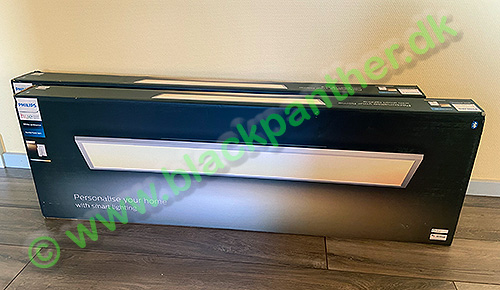
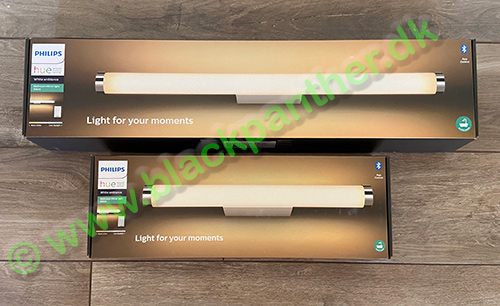
Two Philips Hue Aurelle lamps

Hue project almost finished

It's fascinating how fast I have implemented Hue products in my home. When I started buying Hue products, I didn't imagine that I would end up with all my lamps being Hue products. Furthermore, because it isn't a cheap project, I only buy the products if they are on sale.

At the moment, I have one lamp for the utility room, one lamp for the living room, and one lamp for each bathroom. The lamps will be put up when I get a visitor that wants to help me. It is almost impossible to put up those lamps by yourself. I cannot hold the lamp, push the clamps, and hold on to the wire simultaneously.

The only two lamps I have left that aren't Hue lamps are in the kitchen and the shed. I'm not sure I want to put up a Hue lamp in the shed, but it would be nice with a lamp with a motion sensor. I have experienced the lamp being on when walking into the shed even though I haven't been there the last couple of days.

I would like a big lamp in the living room so that I can provide my guests with some lighting. I prefer indirect lighting, which is not very good when you need a lot of light to see something.

I have started to hunt for a good bargain :-)

Hue lamps

Philips Hue – Ensis

Finally, I've found a lamp for my dining room that I like. I'm getting more and more thrilled about the Philips Hue products. This time I've fallen for the lamp called Ensis.

My problem with lamps over the dining table is that they often send light into the eyes of the people around the table. I'm aware that it's done so that the lamp also lights up the room, but it is rather annoying when you are sensitive to light.

My old dining table lamp had that problem. Furthermore, it used halogen light bulbs, so it was hungry for electricity. The lamp was also the only light source in the room, and it was frequently used as the light in the evening when I had visitors. That was not cheap.

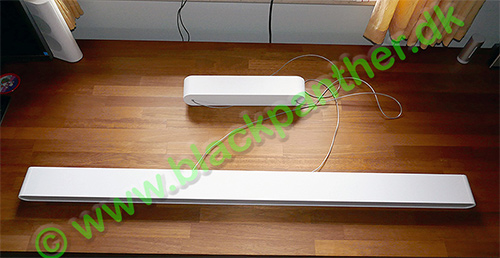
Originally I wanted to buy a Hue strip and place it so that it would light upwards, thereby create indirect lighting, but when I saw the Ensis lamp, I changed my mind. The Ensis lamp is perfect because it has two separate light sources - one sends the light upwards while the other sends the light downwards. That's why I can adjust color and brightness individually, and I can use the uplight as room lighting when I have visitors. It is perfect.

Philips Hue Ensis

Philips Hue - Outdoor motion sensors

Wow, it takes a lot of planning to put up motion sensors for my outdoor lighting. I started by finding out how to create timers. That was an easy task, and I could program it as I wanted. The next step in the process was to figure out if I could get the motion sensors to work together. That was also possible.

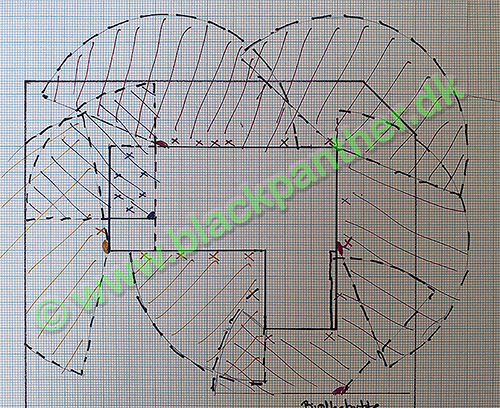
I created a drawing of my house and the coverage of the sensors so that I could find out how many sensors I needed to purchase. It wasn't an easy task to balance how many sensors to buy, coverage when walking around the house, and coverage when someone approaches the house. Furthermore, the sensors can only work together in pairs. The result was the purchase of 7 motion sensors.

The coverage of the sensors depends on how high the motion sensor is placed. Therefore, I started putting up the motion sensors temporarily with double-sided adhesive. While testing, I figured out that if I programmed the sensors to work together, then I couldn't get the lighting to work as I wanted. I want my outdoor lighting to be dimmed at night. When the motion sensors are activated, I want them to turn on lights on full power. After a certain amount of time, I want them to dim the lights. When the sensors are working together in pairs, the only option after activation is to turn off the lights, and that's not how I want it to work.

I returned to the drawing board to have a look at the consequences of no sensors working together. It took some time, but now the solution is finished. I would have preferred more options in regards to the sensors being able to work together.

Overview of outdoor sensors
X is a light bulb - the shaded areas is a sensors coverage

Philips Hue – GU10 spots

Efter indkøb af min Hue Sana lampe og min store tilfredshed med den, så har jeg været i gang med at finde ud af, hvilke muligheder Hue systemer giver. Jeg har nemlig et fremtidigt problem med min udendørsbelysning, som i dag består af to sensorer og 23 GU10 halogen spots. De 2 sensorer kan ikke fungere med LED pærer, hvilket jeg har prøvet. Det kostede mig 23 spots og en sensor, der gik i stykker. Og da GU10 ikke længere produceres i halogen, så er jeg tvunget til at finde et alternativ, når jeg ikke har flere halogen pærer.

Derfor har jeg nærstuderet Hue GU10 og udendørssensorer og de muligheder, det giver. Jeg har nemlig forskellige krav til løsningen. Jeg vil gerne have, at lysene tændes i dæmpet tilstand, når det er mørkt, og så skal jeg selvfølgelig have sensorerne til at skrue op for lyset, når der er bevægelse. Det ville også være rart, hvis jeg kunne slukke lyset helt i nattetimerne, samtidig med at der blev skruet op på fuld blus, når der var bevægelse. Og uanset om lyset er tændt pga af mørke eller ej, så skal der tændes for lyset, når lysmængden falder under et vist niveau – også selvom det sker midt på dagen.

Jeg vil også gerne forbedre dækningen af bevægelsessensorerne. I dag er det nemlig sådan, at hvis jeg går den ene vej rundt om huset, så tænder lyset ikke på hele den ene side af huset, før jeg runder endnu et hjørne. Og hvis jeg går den anden vej rundt og er for lang tid om det, så slukker lyset, inden jeg kommer hen til næste sensor.

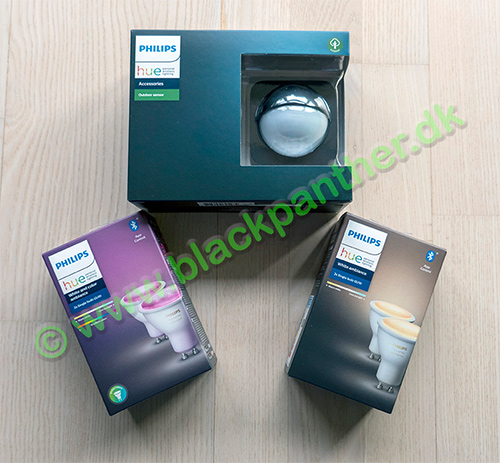
Heldigvis er bevægelsessensorerne billige – de koster en fjerdedel af, hvad mine nuværende koster, så der er råd til flere. Jeg har købt et sæt farvede og et sæt hvide GU10 pærer samt en bevægelsessensor, som jeg afprøver på mit ene badeværelse. Jeg er derfor i gang med at planlægge, hvor mange sensorer, jeg har behov for/gerne vil have, og så venter jeg tålmodigt på, at de kommer på tilbud 🙂

Hue spots and sensor

Philips Hue – Sana

Jeg har altid problemer, når jeg skal vælge lamper, fordi jeg enten ikke er glad for ‘farven’ på lyset eller også er lyset for kraftigt. Derfor har jeg indtil videre brugt en halogen uplight med dæmper i stuen til at give lys, men den er ærlig talt ikke særlig miljøvenlig eller strømvenlig. Derfor blev jeg lidt opløftet, da jeg modtog en reklame om Philips Hue systemet.

Det bedste for mig er et indirekte lys, hvilket også er årsagen til, at jeg trives så godt med min uplight, og da jeg kiggede på Philips Hue sortimentet, faldt jeg over deres Sana lampe. Jeg syntes, at den så god ud, idet den netop gav indirekte lys ved at lyse ind mod væggen, så jeg bestilte sådan en.

Glæden var dog kort, for da jeg modtog den, fandt jeg hurtig ud af, at for at den skulle give nok rumbelysning, så skulle den skrues helt op, og så var lyset så stærkt på væggen, at det generede mig. Ja, jeg ved godt, at jeg er besværlig, men det nytter ikke noget, når den slags giver mig migræne.

Heldigvis kom min far mig til undsætning. Han er utrolig praktisk anlagt, så han så straks muligheden for at ‘vippe’ lampen 90 grader, så den i stedet for at lyse ind i væggen, simpelthen lyste op i loftet. Efter at have fået nogle mål af lampen mm, så var han i gang med at lave et beslag.

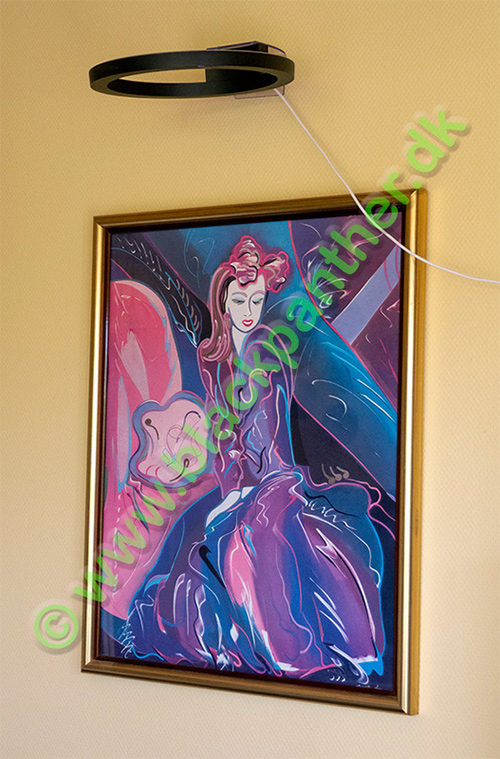
Resultatet kan ses nedenfor, og nu er jeg tilfreds. Faktisk er jeg så tilfreds, at jeg godt vil have en mere i stuen. Den kan selvfølgelig ikke give nær så meget lys som min uplight, men hvis/når jeg har det behov, så kan jeg bruge min uplight. Det meste af tiden er Sana lampen mere end rigeligt lys til mig, og så er jeg vild med muligheden for at styre farven på lyset.

Hue Sana Lamp